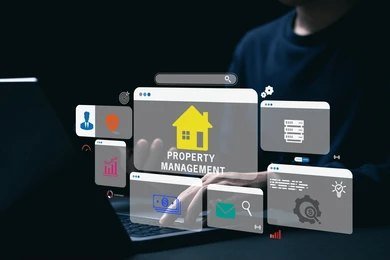
1. Industry Overview: The Growing Importance of Real Estate Software Development
The real estate industry is evolving rapidly. From residential builders and commercial property developers to brokers, property managers, and real estate agencies, businesses are increasingly adopting digital solutions to manage their operations more efficiently. Managing properties, tracking sales enquiries, coordinating construction activities, maintaining financial records, and communicating with customers require a level of organisation that traditional manual processes often struggle to provide.
This is where real estate software development plays an important role. Modern digital systems help real estate businesses bring different operational activities together through a centralised platform. Instead of relying on spreadsheets, paperwork, separate communication channels, and disconnected applications, businesses can manage essential workflows through customised software.
Today, software for real estate developers is not limited to maintaining property listings. It can support the entire business lifecycle, including project planning, construction monitoring, customer relationship management, property inventory, booking, documentation, billing, and reporting.
Depending on the business model, companies may require:
Real estate development software to manage property development projects, resources, timelines, and budgets.
Real estate management software to organise properties, tenants, maintenance requests, and operational records.
Real estate CRM software to manage customer enquiries, sales leads, follow-ups, and client relationships.
Real estate construction management software to monitor construction progress, contractors, materials, and project activities.
Commercial real estate software to manage commercial properties, leasing activities, occupancy information, and property portfolios.
For businesses with complex operations, custom software development provides the flexibility to build a solution around their specific workflows rather than forcing them to adapt to a generic application.
As competition increases and customer expectations change, investing in suitable real estate software solutions can help businesses improve operational visibility, reduce repetitive work, and make better-informed decisions.
2. Current Challenges Faced by Real Estate Businesses
Although the real estate sector offers significant opportunities, managing its day-to-day operations can be complicated. Builders, developers, property managers, and real estate agencies often face challenges when their business processes depend on disconnected tools or manual coordination.
Understanding these challenges is the first step towards choosing the right software development for real estate.
A. Difficulty Managing Multiple Projects
Real estate developers may handle several projects simultaneously, each involving different construction stages, contractors, budgets, deadlines, and resources. Without a centralised system, tracking project progress and identifying delays becomes difficult.
A suitable real estate development management software solution can help businesses monitor project activities, assign responsibilities, and maintain better control over timelines.
B. Disorganised Customer Enquiries and Sales Leads
Real estate businesses receive enquiries through websites, phone calls, social media, property portals, and referrals. When these enquiries are managed manually, important leads can be overlooked.
Using CRM software for real estate allows businesses to maintain customer records, assign leads to sales representatives, schedule follow-ups, and monitor the progress of potential deals.
C. Property and Inventory Management Issues
Builders and property developers need accurate information about available units, sold properties, bookings, pricing, and property specifications. Managing these details across multiple spreadsheets can result in outdated records and communication gaps.
A centralised property management platform helps maintain organised property information and provides better visibility into inventory.
D. Construction Delays and Resource Management
Construction projects involve several moving parts, including contractors, suppliers, materials, labour, equipment, and scheduled activities. A lack of coordination can affect project timelines and budgets.
With real estate development project management software, businesses can monitor project milestones, track resource allocation, and identify operational issues earlier.
E. Lack of Financial and Operational Visibility
Managing payments, expenses, bookings, outstanding balances, and project budgets requires accurate information. When financial data is maintained separately, generating reports and understanding overall business performance becomes time-consuming.
Integrated real estate and construction ERP solutions can bring important business information together, helping management teams monitor financial and operational activities from one system.
F. Communication Gaps Between Teams
Sales representatives, property managers, accountants, site supervisors, and management teams often need access to the same information. When communication takes place through separate channels, important updates may not reach the right people on time.
A well-designed real estate software system creates a shared information environment where authorised team members can access relevant updates and records.
3. Key Features Businesses Need in Real Estate Software
The right software should address actual business requirements rather than simply offer a long list of features. A property developer may need project tracking and construction management, while a property management company may prioritise tenant records, maintenance, and rental payments.
A professional real estate software development company should understand these differences before designing the application.
Here are some essential features that businesses can consider when planning their software.
A. Property and Inventory Management
Property management is one of the core requirements of most real estate businesses. The software should provide a structured way to manage property details and availability.
Useful features include:
Property registration and categorisation.
Residential and commercial property records.
Unit availability and inventory tracking.
Property pricing and specifications.
Booking and allocation management.
Property status updates.
Document and image management.
A properly designed property module helps businesses maintain accurate information and reduce dependency on manual records.
B. Real Estate CRM and Lead Management
Customer relationships directly influence sales performance. An integrated CRM module can help businesses manage the complete enquiry-to-conversion process.
Important features include:
Centralised customer database.
Lead capture and allocation.
Enquiry source tracking.
Follow-up reminders.
Sales representative assignment.
Customer communication history.
Lead status and conversion tracking.
Sales performance reports.
A customised CRM for real estate developers can help sales teams manage prospects more systematically and ensure that customer enquiries receive timely attention.
C. Project Planning and Construction Management
For builders and property developers, project monitoring is essential. The software should provide a clear overview of ongoing development activities.
Depending on the project requirements, features may include:
Project creation and management.
Milestone and deadline tracking.
Task assignment.
Contractor and vendor management.
Material and resource tracking.
Budget monitoring.
Construction progress updates.
Project performance reports.
A customised real estate development project management software solution can improve coordination between office teams and on-site personnel.
D. Financial Management and Billing
Financial operations are closely connected to property bookings, construction expenses, customer payments, and vendor transactions.
A comprehensive system may include:
Customer payment records.
Booking advances and instalment tracking.
Invoice generation.
Outstanding payment monitoring.
Project expense management.
Vendor payment records.
Financial summaries and reports.
Businesses with more complex requirements may benefit from integrated real estate and construction ERP functionality that connects financial information with other operational modules.
E. Document Management
Real estate transactions involve several documents, including property agreements, booking forms, customer records, payment receipts, project documents, and legal paperwork.
A document management module can help businesses:
Upload and organise documents.
Maintain property-wise records.
Store customer-related files.
Manage document categories.
Retrieve information quickly.
Control access based on user roles.
This makes important business information easier to organise and access.
F. User Roles and Access Management
Different employees require access to different information. For example, a sales representative may need customer and lead information, while an accountant may require access to billing and payment records.
A well-developed application should support:
Admin and management accounts.
Sales team access.
Property manager access.
Accountant access.
Site supervisor access.
Role-based permissions.
Activity monitoring.
This helps maintain a more structured and controlled working environment.
G. Mobile Application Integration
Real estate professionals are not always working from an office. Sales teams visit properties, site supervisors monitor construction activities, and managers may need important updates while travelling.
A connected mobile application can provide access to property records, customer enquiries, project updates, and other essential information.
Businesses can consider real estate mobile app development alongside their web-based management system to support employees and customers across different devices.
4. How Technology Solves These Problems
Implementing the right technology can help real estate businesses move from disconnected manual processes towards organised, data-driven operations.
However, successful implementation depends on selecting the right architecture, features, and integrations for the business.
Here is how modern real estate software systems can address common operational challenges.
A. Centralised Business Operations
Instead of maintaining separate records for properties, customers, payments, projects, and vendors, businesses can connect these activities through one centralised application.
This reduces information gaps and allows authorised users to access relevant records from a common system.
B. Workflow Automation
Many real estate activities involve repetitive administrative work, such as assigning leads, updating booking statuses, generating payment reminders, and preparing reports.
Automation can reduce manual effort by handling predefined processes.
For example:
New enquiries can be automatically assigned to sales representatives.
Follow-up reminders can be generated based on scheduled dates.
Property availability can be updated after a confirmed booking.
Payment reminders can be triggered when instalments approach their due dates.
Management reports can be generated from available system records.
These capabilities make real estate software development services valuable for businesses looking to improve efficiency.
C. Better Project Monitoring
A digital project management system can provide management teams with a consolidated view of ongoing development activities.
Project dashboards can display:
Current project status.
Completed and pending tasks.
Upcoming milestones.
Budget utilisation.
Resource allocation.
Delayed activities.
With this information, managers can identify potential issues and take corrective action sooner.
D. Improved Customer Relationship Management
An integrated CRM helps businesses maintain a complete history of customer interactions. Sales representatives can understand previous conversations, enquiry requirements, follow-up dates, and current lead status.
This supports more organised communication and helps businesses manage the customer journey from the initial enquiry to booking and beyond.
E. Data-Driven Business Decisions
Modern software can convert operational information into meaningful reports and dashboards.
For example, management teams can analyse enquiry sources, sales conversions, available inventory, project expenses, pending payments, and employee performance.
Such insights help businesses understand their operations and identify areas that need attention.
F. Integration With Existing Business Tools
Real estate businesses may already use accounting platforms, payment gateways, communication tools, websites, or third-party applications.
Custom-built solutions can be designed with suitable APIs and integrations to connect these systems where technically and commercially feasible.
This is one of the key advantages of custom software development services: businesses can create a connected technology environment that reflects their existing processes.
5. Industry Trends Shaping Real Estate Software Development
The future of the real estate industry will increasingly depend on how effectively businesses use technology to manage information, improve customer experiences, and coordinate operations.
Several trends are influencing the development of modern real estate applications.
A. Cloud-Based Real Estate Management Systems
Cloud-based applications allow authorised users to access business information through internet-connected devices. They can be useful for companies managing multiple projects, offices, or property locations.
Cloud infrastructure can also support centralised data management, system scalability, and easier collaboration.
B. AI-Assisted Property Discovery and Customer Support
Artificial intelligence is creating new possibilities for property search, customer support, and business analytics.
Depending on implementation, AI-powered features may help businesses:
Recommend properties based on customer preferences.
Categorise and prioritise incoming enquiries.
Assist with customer support through chatbots.
Analyse enquiry and sales patterns.
Summarise large volumes of business information.
AI features should be introduced according to actual business needs, data quality, and implementation feasibility.
C. Mobile-First Real Estate Applications
Customers and real estate professionals increasingly expect convenient access to information through smartphones.
Mobile-first platforms can support property browsing, enquiry submission, appointment scheduling, sales updates, and internal business communication.
This makes mobile accessibility an important consideration when planning new real estate software solutions.
D. Integrated Construction and Property Management
The boundaries between construction operations and property management are becoming increasingly connected. Developers may need to manage construction progress, inventory, customer bookings, vendor activities, and financial information through an integrated system.
This creates demand for construction and real estate management software that connects different stages of property development and business operations.
E. Advanced Reporting and Business Analytics
Real estate companies generate valuable information through customer enquiries, bookings, property transactions, construction activities, and financial operations.
Reporting tools can help convert this information into actionable insights, allowing management teams to understand business performance and plan future activities more effectively.
6. Real Project Example: BrandIT's Experience in Business Software Development
Developing effective business software requires more than writing code. It involves understanding operational challenges, planning workflows, designing user-friendly interfaces, organising data, and building systems that support real business activities.
At BrandIT Consultancy, our software development portfolio includes projects across different business categories, demonstrating our experience in building digital solutions for practical operational requirements.
Some examples from our portfolio include:
Mallick Golden Villa – Hotel Management: A digital project in the hospitality sector that reflects the role of software in organising business operations and management activities.
DriverZPoint: A project from the transportation and driver-booking domain, representing a different business workflow and service-management requirement.
Orazayka: A food-ordering project that demonstrates the application of digital technology to customer-facing business processes.
City Life: A doctor-booking application project that represents appointment-oriented service management.
Although these projects are from different industries rather than dedicated real estate implementations, they illustrate the variety of business workflows that digital applications can support.
The same approach to understanding business requirements, organising information, and developing customised workflows can be applied when planning software for real estate developers, property managers, and construction businesses.
For a real estate company, the objective would be to identify its specific operational requirements and develop an appropriate solution around property management, customer relationships, project coordination, inventory, billing, or other required functions.
Explore our software development projects: https://branditconsultancy.in/portfolio.php?id=5
7. Frequently Asked Questions About Real Estate Software Development
Q1. What is real estate software development?
Real estate software development is the process of designing and building digital applications that help property businesses manage activities such as property listings, customer enquiries, project management, bookings, financial records, construction operations, and property maintenance.
These applications can be developed as web platforms, mobile applications, or integrated business management systems.
Q2. What features should real estate management software include?
The required features depend on the business model. However, common features include:
Property and inventory management.
Customer and lead management.
CRM and sales tracking.
Project and construction management.
Booking and payment management.
Document storage.
Vendor management.
Reporting and analytics.
User roles and permissions.
A customised solution can include additional modules based on the company's operational requirements.
Q3. How much does real estate software development cost?
The real estate software development cost depends on several factors, including application complexity, number of modules, user roles, UI/UX requirements, integrations, security requirements, and the choice of technology.
A basic property management application will generally require a different investment from a comprehensive ERP platform that connects construction, CRM, inventory, billing, and financial management.
The most effective way to estimate the cost is to define the project scope and technical requirements before development begins.
Q4. What is the difference between real estate CRM and property management software?
Real estate CRM software primarily focuses on customer relationships, enquiries, sales leads, follow-ups, and conversions.
Property management software focuses on managing properties, units, tenants, maintenance activities, bookings, and related operational records.
Some businesses require both functionalities within a single integrated platform.
Q5. Can software be customised for builders and real estate developers?
Yes. Custom software development allows builders and developers to create applications based on their individual workflows.
For example, a builder may require construction tracking, contractor management, material inventory, project budgeting, and customer booking modules, while another developer may prioritise CRM, sales tracking, and property allocation.
Q6. Can real estate software include mobile applications?
Yes. Businesses can develop mobile applications alongside their web-based platforms.
Depending on the requirements, mobile applications can support property searches, customer enquiries, booking updates, employee access, construction progress reporting, and notifications.
Q7. Which is better: ready-made real estate software or custom software?
Ready-made software may be suitable for businesses with standard requirements and limited customisation needs.
However, businesses with specialised workflows, multiple operational departments, unique reporting requirements, or complex integrations may benefit from a customised solution.
The right choice depends on the business's current requirements, future growth plans, budget, and expected level of flexibility.
Q8. How do I choose the right real estate software development company?
Before selecting a development partner, consider:
Experience in business application development.
Understanding of real estate workflows.
Customisation capabilities.
Technical expertise and technology choices.
UI/UX design quality.
Integration capabilities.
Communication and project management.
Maintenance and post-launch support.
Choosing a development partner that understands business operations is just as important as choosing one with technical expertise.
8. Why Choose BrandIT Consultancy for Software Development?
Selecting the right technology partner is an important decision when investing in business software. A successful application should not only function correctly but also solve practical problems, simplify operations, and support the company's long-term objectives.
BrandIT Consultancy focuses on developing digital solutions based on business requirements, helping organisations turn their operational ideas into functional technology.
Whether you are a builder, property developer, real estate agency, or property management company, we can help you plan a software solution around your business needs.
Our Software Development Capabilities Include:
Custom Software Development: We plan and develop business applications around specific workflows, operational requirements, and organisational goals.
Business Management Software: We build digital systems designed to organise business information, streamline workflows, and improve operational visibility.
CRM and Management Systems: We develop solutions that can support customer records, enquiry management, sales workflows, and other business processes.
Web Application Development: We create web-based applications that allow authorised users to access business functions through supported devices and browsers.
Mobile App Development: We develop mobile application solutions for businesses that require convenient access to their services and operations.
UI/UX Design: We focus on creating intuitive interfaces that make applications easier to navigate and use.
Software Integration: Where required, we can plan integrations between applications, APIs, and third-party services to support connected workflows.
If you are looking for a real estate software development company that understands the importance of business-focused technology, BrandIT Consultancy can help you explore the right development approach.
Businesses searching for a software development company in Kolkata, a custom software development company, or an experienced technology partner can connect with our team to discuss their project requirements.
9. Conclusion: Build a Smarter Real Estate Business With the Right Software
The real estate industry is becoming increasingly technology-driven. Managing property inventory, customer enquiries, construction activities, financial operations, and business communication through disconnected systems can create unnecessary complexity.
A well-planned digital solution can bring these activities together, improve information accessibility, support better coordination, and help management teams make informed decisions.
From real estate development software and CRM applications to property management platforms and integrated construction ERP systems, the right technology can make everyday business operations more organised and efficient.
However, every real estate business has different requirements. The ideal solution should be based on its operational structure, business goals, budget, and future expansion plans.
At BrandIT Consultancy, we believe software should be built around the way a business works. If you are planning to digitise your property management operations, streamline construction workflows, or develop a customised real estate application, our team can help you explore a suitable solution.
Looking for a reliable software development partner? Connect with BrandIT Consultancy and take the next step towards smarter business management.
Explore our software development portfolio: https://branditconsultancy.in/portfolio.php?id=5
More Articles
Custom Website Development: A Step-by-Step Guide for Small Businesses
Custom web development enables small businesses to create unique online presences tailored to their specific needs and goals, instead of relying on pre-made templates. In addition, this comprehensive ...
Read all
What are the major components of Digital Marketing?
Why digital marketing?Every marketing strategy also includes a digital plan of action within it. Without factoring it in, no marketing goal can be executed now. When you include it, you get a wholesom...
Read all
How SEO works for business
The Power of SEO in Business: A Comprehensive GuideIn the continuously evolving landscape of digital marketing, the competition to stand out is fierce. Amidst this digital crowd, how does one ensure t...
Read all
Social Media and SEO Services: How Integrated Digital Marketing Improves Brand Visibility and Organic Growth
Industry Overview: Why Social Media SEO and SEO and Social Media Marketing Services Are Essential for Modern BusinessesThe digital landscape has transformed the way businesses connect with customers. ...
Read all
HTTPS Website Security: How Secure Websites Build Trust, Improve SEO, and Protect Customer Data
HTTPS Website Security and the Growing Importance of Secure Website DevelopmentAs businesses continue to move online, website security has become one of the most critical aspects of maintaining custom...
Read all
Why site speed is significant in web design
Why Site Speed Is Significant in Web DesignIn today’s fast-paced digital world, patience is scarce — and your website has only seconds to make an impression. A slow-loading site doesn’t just cos...
Read all
Responsive Website Development: How Modern Businesses Improve User Experience and Generate More Leads
Responsive Website Development and the Growing Importance of Mobile-Friendly Digital ExperiencesThe way customers interact with businesses online has changed dramatically over the last decade. Today, ...
Read all
Flutter App Development: Why Businesses Choose Cross-Platform Mobile Apps in 2026
Industry Overview: The Rise of Flutter App Development and Cross Platform Mobile App DevelopmentMobile applications have become one of the most important tools for business growth, customer engagement...
Read all
Importance of User Experience(UX) in Apps
Why UX is Your App's Secret Weapon for SuccessIn today's crowded app stores, a brilliant app idea isn't enough. What truly differentiates a winning mobile app is its user experience (UX). ...
Read all